Friday, April 17, 2015

Reaching for the Stars

Sudden Ripples of a Female Voice
When women start playing with the big boys in a widely known male dominated area of something, it gets people's attention. Some examples from history include Joan of Arc, Cleopatra and good ol' Elizabeth the I. All of these brave and determined ladies made some groundbreaking ripples during their lifetimes that can still be felt today because they refused to back down in how they wanted to do something.

During the Post Modern time of the arts, women were becoming more active in anything to do with writing, painting, sculpting etc. They were coming out of the shell of being considered secondary to what was personal and important in a person's life. The West was still in a traditional state of expression where it was left to the man, period. They broke this mold by dipping their much needed creative toe in the pool of oppurtunity.

First up!
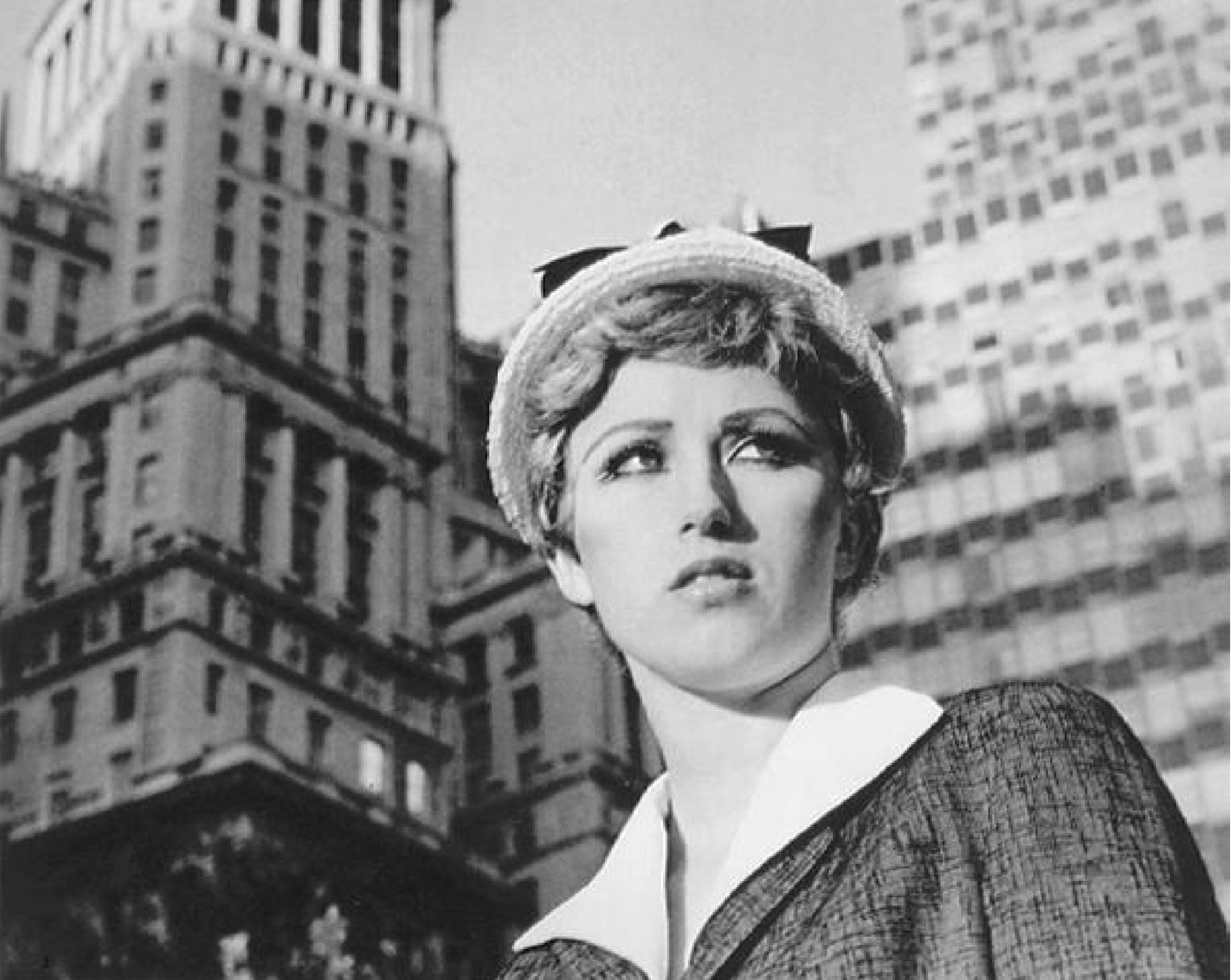
Cindy Sherman decided that taking pictures of herself to make a blunt point on the many faces of women that made many women relate to her pictures. Such as her Untititled Film Series that depitcts Sherman reenacting moments from typical B Movie films, she calls attention to the a stereotype for an actress during black and white films. Sherman found her canvas in a camera, and her perchant for costumes would sometimes mistake this for cosplay, except this is legit art. There is a meaningful message that Sherman is sending and I got it loud and clear. Since I am budding photographer, I hoped I got it...

"Look at what I am wearing. How does it make you feel?"

This is Untitled Film Still #21. Seems like a screencap straight out of Casablanca, doesn't it?

#35. When I first saw this still, I first thought it was Lucille Ball from "I Love Lucy".

#30 from Untitled Film Stills. She took a spot on look at women in horror films, I think.


Next up! Miss Judy Baca because as far as I know, she isn't married. She is an pioneerng activists in human equality and creative voice through teaching and guess what? Mural painting! This lady is a powerhouse of motivation when it comes to being creative and sharing it with others. But most of all she calls attention to topics not everyone wants to talk about, such as the poor, the corrupt, the censored lesbian community and just plain equality that we say we want, but don't act in attaining less than half the time. I have a feeling that if she ran for President, she would win because chances are her funding would go to meaningful sources such as the poor, homeless and activist groups for art classes for the less censored instead of million dollar campaigns.


The Wall. A half mile of California's history that covers all kinds of topics and moments that both shaped and defined the state. Her most recongnized and defining work of her ideals and creativity.
Tres Generaciones This really brings my theme home to the main point again. Women. Without use there would be no mankind, literally but we have come a long way from just being wives and keeping the house clean while the men are off fighting other men.This reminds us that behind every generation, there is a grandmother, a mother, a daughter and a future child.

Miss Baca reminds us that being creative isn't just boiled down to the rights of gender, or anything so plebian. It is the distint impulse to simply express yourself how you want, in a country where you are more than free to do so. Be yourself and express yourself in a way that us fun and is strictly you.


"The Influence of Feminism in Art." Art History Unstuffed. Web. 17 Apr. 2015. <http://www.arthistoryunstuffed.com/the-influence-of-feminism-in-art/>.
 
"Biography - Cindy Sherman - Photographer, Model, Director, Actor, Avant-Garde Images, Doll Parts and Prosthetics, Movies." Biography - Cindy Sherman - Photographer, Model, Director, Actor, Avant-Garde Images, Doll Parts and Prosthetics, Movies. Web. 17 Apr. 2015. <http://www.cindysherman.com/biography.shtml>.
 
 "Biography." Judy Baca Artist. Web. 17 Apr. 2015. <http://www.judybaca.com/artist/biography/>.

Sunday, April 5, 2015

Depression to Expression

To Express Yourself
I honestly don't think the African Americans had an "influence" on Early Modern era, they had an impact. Their music, their art, their artistic and creative expressions were strong ripples from what was changing in the Early Modern arts.

Traditional art was being changed. The rules and requirements for expressing yourself in music was greatly influenced by the people wanting something different, something new. Jazz was the new thing for them. Not just because it was influenced by the music in africa or that African Americans were frequent in it, but that it was a strong influencial change.

This is why I admire Louis Armstrong so greatly. His story is almost like an 'rags to riches' cliche, but more of someone really just wanting to express himself in a way that he made work for him, and had fun to make the music style his!


I love old music that were made classics, such as Louis Armstrong's "What A Wonderful World". It was recorded raw and beauitiful, way before the time of vocal auto tuning and all the other digital cheats of this current age. His voice is gravelly, his atittude when performing all his own which both become his signatures in what made him so popular. It wasn't what he brought to the stage, it was how he performed it that people loved.

The Harlem Renaissance, was like many revolutions before it, crying out for the world to notice the message it is trying to show. For Halem, it was equality and group expression in a way that shook the Great Depression.

This meant written works by African Americans hit the stands like wildfire from a wave of inspiration and a hunger to be read, to express their feelings of having to deal with the afteraffects of a war and the hard life of the Great Depression. Such is the reason why I think abstract was used best by Harlem artists. The picture above is only a refecence to many of the works that were made during this explosion of art, period. 

People weren't sad so much as trying to find a reason to be happy and stay happy. I think out of trying to be proven equal, they were looking for motivation to keep forward, their heads above the water. I admire and respect people in general who take what they have and make the best out of it. But to reach for more and be creative with it to make the world stop and look makes me want to applaude. It isn't just one race that has done this, humanity has done this over and over again in the form of "revolutions".

The word revolution should just be associated with war or violence, but a change in the social sctucure of society. A blossom of a new culture that will make or break the people involved. Some social revolutions are more noteworthy than others just because they were not associated with too much violence or loss of life.

I am content the African Americans were able to have a renaissance all their own because it isn't the only one they will get, not the last. This one was fun to read about and I finally get most of the references made in the Disney movie "The Princess and the Frog" besides just good ol' Louis. Ha ha!

Wednesday, March 25, 2015

Impressions of Gandeur

 Impressions Not Impressing
I do not find Impressionism art very appealing. I looked at the paintings and just didn't feel much at all, despite reading all the content we were provided.

But I can say that what is interesting about this art form is that  it reminds me of photography, before cameras debuted. The want to capture a moment the instant it happens makes up this entire art form. The artists live in the now but the irony is that they are trying to illustrate the past as quick as possible, as fast as possible.

During this time, that is the only way to get instant pictures. But what bothers me is that the art form is messy and rushed. I know the intent is to be fast but there isn't much detail or feeling in the moments that are so fleeting. When I see the works from this period, I think "Why do I feel like I missed something?"

Time and detail mean a lot to me. It means work and time has been put into a work. Effort, sweat and sleep has been used to create something that is suppose to leave an impression from one. But I just am not impressed from the blurry, sketchy look of this art such as Paris Street, Rainy Day by Gustave Caillebotte.
Similar to a camera out of focus, the scene's details are blurred out of existence. Others can find beauty in this style but sadly, I am not. 

http://entertainment.howstuffworks.com/arts/artwork/paintings-by-gustave-caillebotte2.htm


Wednesday, February 25, 2015

Portraits over the Years

 Beautiful Portraits Through the Visual Arts Revolutions
Portraiture through the ages has developed in many ways for who it was painted, how it was done and whom was in it.

From the Italian Renessiance where many depictions of Jesus, God and aristocrats of the upper crust forming the higher society were some of the most popular subjects that define the visual arts of that era. Sweeping pictures of full body portraits with loose fitting clothing, definition of anatomy and soft textures in the paint,oils and freschas such as this painting by Michelangelo's Last Judgement during this time period:
Mannerism is defined in this paiting with its very tall structured models, humor from the angels using trumpets to wake the dead and lavish detail in every single piece that makes it all pop out, looking alive.

Although no one knew what these biblical looked like at the time, Michelangel did his best to portray the second coming of Jesus as well as he could, making this more of a fanwork than an actual depiction but the characteristic of it being a group portrait still stand.

In the Northern Renaissance, portraits change in the way they were painted and how the models were depicted. I go into more detail in my Mona Lisa post HERE. 

The bottom line is that portraits get more personal and intimate in their models, straying from the upper crust of society or biblical scenes to the individual and the lower classes. Instead of long sweeping figures, the canvas is filled with people from the bust up, facing either straight on or from the side in comfortable poses while the backgrounds are of sweeping landscapes and views that both contrast and pull the eye to the sitter.

Now, onto the Baroque era. Portraits are somewhat of a subgenre in the visual arts that are being taken advantage of the Catholic Church which set the pace for this time period. Since the Church wanted more biblical scenes to promote the bible, much of the upper society that benfited from the Church's influence followed suit.

A boom in paitings happened in several countries such as France and Spain concerning still life and group portraits. Figures are painted somewhat along or singular from others in groups. Subjects varied from still life of rich possessions of the aristocracy to lower class pictures of farmers and merchants. Many of the these paintings depicted grand scenes with a great contrast between light and dark, a great show of emotion and continued emphasis on Naturalism such as the Italian Renaissance.

The work to best depect these techniques would have to be the Night Watch by Rembrandt.

Thanks for reading and please visit this link for more information on the Baroque Era paintings plus links to examples of portraits for this time period.


Wednesday, February 11, 2015

A Florence Painter and the Mysterious Famous Woman

The Mona Lisa. An almost immortal piece of history that is famous like students to Shakespear as George Washington was the first recongnized president. These facts have been ingrained without really knowing why, but I myself have discovered why Mona Lisa is so famous.

What makes Mona Lisa so special is the fact that she is a revolutionary work itself in the wake of portraits that were so prominent in the Northern Renaissance. Everthing from her posture to the tiny detail of her hair and the curling river behind her is a change in the way of portraits were done in the early part of the 15th century.

Before Mona, many portraits and paintings were of full figures with tight fitting clothes, emphasis on anatomy similar to Greek statues, a distinct and recongnizable background plus a vast amount of concentration on religious themes. The Mona Lisa was a new approach to not these characteristics but portairture itself. She sits shown from only the waist up in front of a landscape with tiny details etched into the mountains, a winding river that faded away into the background similar to macroism in modern photography. The woman herself is painted in different shades that emphasis the roundness of her figure and her loose style clothing, calling attention to her features such as her soft, mysterious smile and her hands having been folded into her lap that radiate farmiliarity and contentment.

During the time Mona appeared in the 15th century, Leonardo lived in Florence. His relationship with the Medici dynasty whom were his financial backing at the start of his more successful part of his career had about dried up due mostly to Lorenzo's death. He had painted and worked for several other figures such as Ludovico Sforza, the Duke of Milan where he lived before moving back to Florence. He worked on several other works while in the Guild of St. Luke. Althought his time with the Medici influence had only lasted a couple of years, it was important to kickstart getting his work developed for bigger recongnition....hence the Mona Lisa in roughly 1505. She is a shining example of Da Vinci's genius in his style of attention to detail and mastery of techniques like sfumato, or subtle shading, that he tweaks to his advantage as a example of thinking nature (Mona's background) and humans (Mona) can be balanced together instead of pointing out of how different or symmetrical they are.

"Mona Lisa | Painting by Leonardo Da Vinci." Encyclopedia Britannica Online. Encyclopedia Britannica. Web. 12 Feb. 2015. <http://www.britannica.com/EBchecked/topic/388735/Mona-Lisa>.

 "A Closer Look at the Mona Lisa | Louvre Museum." A Closer Look at the Mona Lisa | Louvre Museum. Web. 12 Feb. 2015. <http://musee.louvre.fr/oal/joconde/indexEN.html>.


Thursday, January 29, 2015

Me, Myself and Mine

My name is Abigayle Harper, currently 24 years old and am a budding photographer, with a love for landscapes and mountains. I am a short, hardworking but fiesty housekeeper who writes short stories in my spare time and constantly making a cup of tea, summer or winter.

My relationship to art? I used to draw and doodle all the time, studying the art of Japanimation (almost drawing a full comic during highschool), learning to play the violin and singing in multiple languages until that song is permentantly in my brain. Drawing always meant new creative creations from graphite, later with a Wacom stylus. 

I think I enjoy art best when I am expierencing it in person, whether a play or a live concert. It has to be in person. I want to feel the notes of the music beat through my blood, the voices and watching the emotions of the person acting so I might understand the character better in what they are trying to convey or deal with. I even got to be an extra in a UAF production called "The Messenger" when the angel was shot in front of a crowd of protesters. I had never acted before, never taken a theater class since I was asked to be an extra by a friend, when the directer randomly pointed at me saying "you check his pulse". Maybe I could have protested or backed out, but I thought 'why not?' It was fun and an expierence learning what it takes to make a scene in a film. I just never found out if that scene was kept in the final cut...

Here's to art! Please watch the video below. It is sung in an traditional style of Japanese music called Enka to a popular song called Senbonzakura. It is a nod to Japanese culture which inspired me to write, sing, speak a different language and draw to this day! You might even be inspired to dance. I wouldn't blame you. It is very catchy! (Hint! Start the video at :30!)
 
Japanese Enka style Song with Modern Dancing